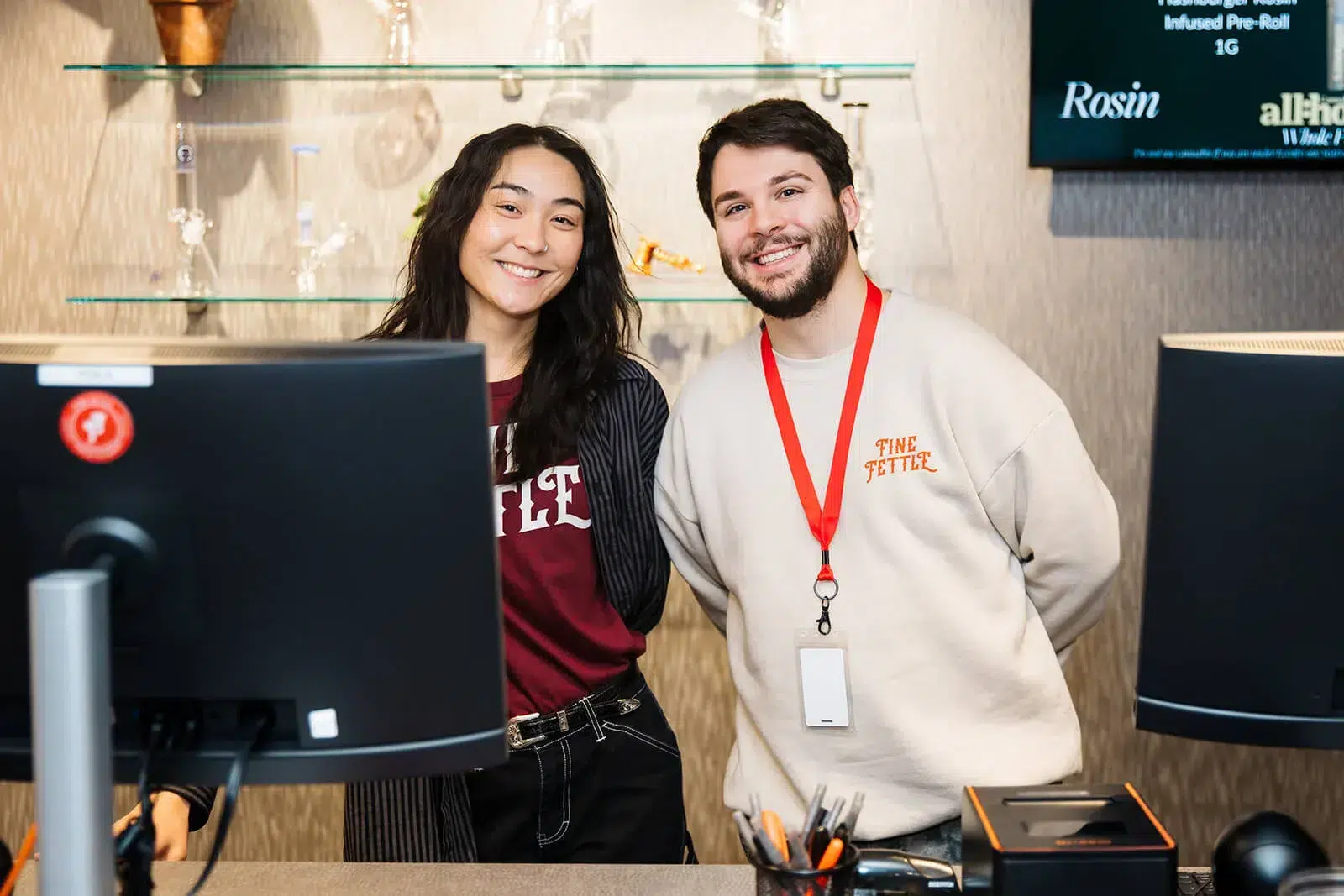
Questions are the fastest way to turn a wall of options into a purchase you actually feel good about. When you come into Fine Fettle, you don’t need to sound like a cannabis expert. Just tell us what kind of day you’re trying to have, and what you want to avoid.
We built this guide around what we hear at the counter. People want effects they can count on, a potency that feels manageable, and a product type that fits their routine. You’ll find simple question prompts you can copy into your notes app, a quick timing table, and a few tips from how our team helps customers shop.
Before you pick a product
If you want the conversation to be easy, start with your goal. The strain you saw online might be great, but what matters more is how you want to feel and how much room you have in your day for cannabis effects.
We see the smoothest shopping trips happen when you share a few basics and let your budtender do the sorting. That approach is also echoed in guidance on how to help your budtender help you, because it gives staff enough context to recommend something realistic for your tolerance and timing.
Your goal:
What are you aiming for? Like relaxed, calm, chatty, focused, creative, or ready for bed.
Your guardrails:
What do you want to avoid? Like feeling foggy, couch-locked, or too “in your head.”
Your timing:
Do you need something that comes on fast, or are you fine waiting for a slower build?
Your experience level:
New, occasional, returning, or daily use.
Your setting:
At home, with friends, out for errands, winding down, or getting ready for sleep.
Effects (how you want to feel)
Effects are personal. Two people can buy the same product and describe it differently. Still, you can get much closer to the experience you want when you give your budtender some details.
Here are a few openers that work well in real conversations at Fine Fettle.
If you’ve had a not-great experience before, tell us the basics. What was it and how much did you take? How long did it last? What part felt uncomfortable? We can’t explain it as a doctor would, but we can help you avoid common mismatch patterns, like picking a dose that’s bigger than your tolerance.
Potency (so you don’t overdo it)
THC percentage is a common starting point, but it’s not the whole story. A product’s true effect and potency depend on its complete chemical profile. This includes:
- Terpenes (aromatic compounds)
- Secondary cannabinoids like CBD or CBN working together, known as the entourage effect
- Your individual dose, product format, and personal tolerance
If you want a practical way to talk about potency, ask questions that take the conversation into real-world use. These tend to lead to the best outcomes for first-timers and for anyone trying a new format.
If you want to go one step deeper, ask about what else is on the label. Some customers also compare products by cannabinoid ratios and terpene profiles (not just THC). If you want a quick primer before your visit, our Guide to Terpenes and Cannabinoids explains what those words mean in a shopping context and how to use them without going too deep in the weeds.
Product types and timing
If you only ask one timing question, make it this: “How fast will I feel this, and how long will it last?” Most stories about cannabis hitting too hard usually start with timing.
To help you picture it, here’s a comparison table. Treat these as typical ranges, then confirm the specifics with your budtender for the product.
| Product type | Typical onset | Typical duration | Why people choose it |
|---|---|---|---|
| Flower or pre-roll | Minutes | 2 to 4 hours |
Fast feedback, and it’s easier to stop when you reach your comfort zone.
Note: Flower and pre-rolls are available for adult-use and medical patients in MA and CT. In GA, flower is allowed for patients 21+, but must be consumed through a dry herb device. Pre-rolls are not allowed in GA. |
| Vape | Minutes | 1 to 3 hours | Quick onset and convenience, often with less lingering smell than smoke. |
| Edibles (CT and MA) or soft drops (GA) | 30 to 90 minutes | 4 to 8+ hours | Longer-lasting effects without inhalation. |
| Tinctures | 15 to 45 minutes | 3 to 6 hours | More control over serving size, which many beginners prefer. |
| Capsules | 45 to 120 minutes | 6 to 10 hours | Consistent dosing in a familiar wellness format. |
| Topicals | 15 to 60 minutes | Varies | Targeted localized relief without systemic intoxicating effects. |
For edibles and soft drops especially, your best move is patience. Delayed onset is a common reason people accidentally take more than they meant to. The National Institute on Drug Abuse overview of cannabis notes that cannabis, when eaten, can take longer to kick in. It may last longer than inhaled cannabis, which is exactly why “start low and slow” matters here.
Indica, sativa, hybrid, and terpenes
While indica and sativa are traditional botanical descriptions of how a plant grows, they don’t reliably predict how a product will make you feel. Instead of relying solely on strain categories, ask your budtender about the product’s terpenes and cannabinoids. Those provide much better clues about whether you’re likely to feel soothed, energetic, or balanced.
Good budtenders connect the label to patterns they hear all week, like “this felt mellow for evenings” or “this made me feel a little too racy.” You still might need a couple tries to learn your preferences, but these questions help you avoid the most obvious mismatches.
Your first dispensary visit (plus what to bring)
Your first dispensary visit is usually smoother when you handle the basics before you come in.
Bring a valid, unexpired ID.
If you’re visiting a dispensary in Massachusetts or Connecticut, you can shop recreational (21+) or medical (with a valid state medical card). If you’re visiting us in Georgia, you must present a valid Georgia Medical Cannabis Registry card.
Think through your “yes” and “no” list
for effects and timing, even if it’s just one sentence in your phone.
If you like to browse without pressure, you can also explore the Fine Fettle online menu first and come in with two or three candidates. It makes the conversation at the counter feel more like comparing options, rather than starting from scratch.
Georgia medical cannabis, SB 220, and “soft drops”
Under Georgia’s updated medical cannabis laws (SB 220), the program has expanded beyond basic low-THC formulations. In addition to oral formats like tinctures, capsules, and soft drops, qualifying patients aged 21 and older now have access to vaporizable products with higher potency limits (up to 1,200 mg THC per package). Ask your budtender to guide you through the full range of compliant formats and serving sizes.
Product availability follows state rules.
If you’re not sure what’s allowed or in stock, ask us to take you through the current options for registered patients.
Patient-focused guidance is the priority.
If you’re using medical cannabis for a health concern, it’s smart to involve a licensed healthcare professional. We can help you focus on label education and responsible use basics.
A quick script
Sometimes you just want to point at a product and be done. But when someone says they want the strongest thing, our team recommends slowing down the conversation so you don’t end up uncomfortable.
If you want a simple way to start, try this script and fill in the blanks:
FAQs
What are the best questions to ask a budtender if you’re new?
Ask, “What would you suggest for a first-timer with low tolerance?” Then ask, “What is a conservative starting dose?” Finish with timing: “How long until I feel it, and how long does it usually last?”
Is THC percentage the best way to judge potency?
No. THC percentage is only one piece. Dose, product type, your tolerance, and the rest of the label can change how strong something feels. Many people prefer a lower dose they can control over a high-THC pick that overshoots the mark.
What should you tell a budtender if you had a bad experience before?
Tell us the product type and the approximate dose. Describe when you took it, how long it lasted, and what you disliked about the effects. That context helps us suggest a different format or a smaller serving that’s more manageable.
What should you ask about edibles or soft drops?
Ask about milligrams per serving, how many servings are in the package, and the expected onset timing. Also ask what “start low and slow” looks like for that exact product so you don’t take another dose too soon.
Can a budtender recommend something for a medical condition?
Budtenders can educate you on product types, labels, and responsible use, but they can’t diagnose or prescribe. If you’re using medical cannabis for a health concern, check in with a licensed healthcare professional for medical guidance.
Talk to us about your goals
To experience the effects and potency that’s right for you, you just need a short list of questions to ask a budtender. Plus, it helps to be clear about what you want and what you don’t want.
If you feel guidance would be helpful before you visit, reach out through the Fine Fettle contact page. Tell us your goal, your experience level, and the format you’re curious about.