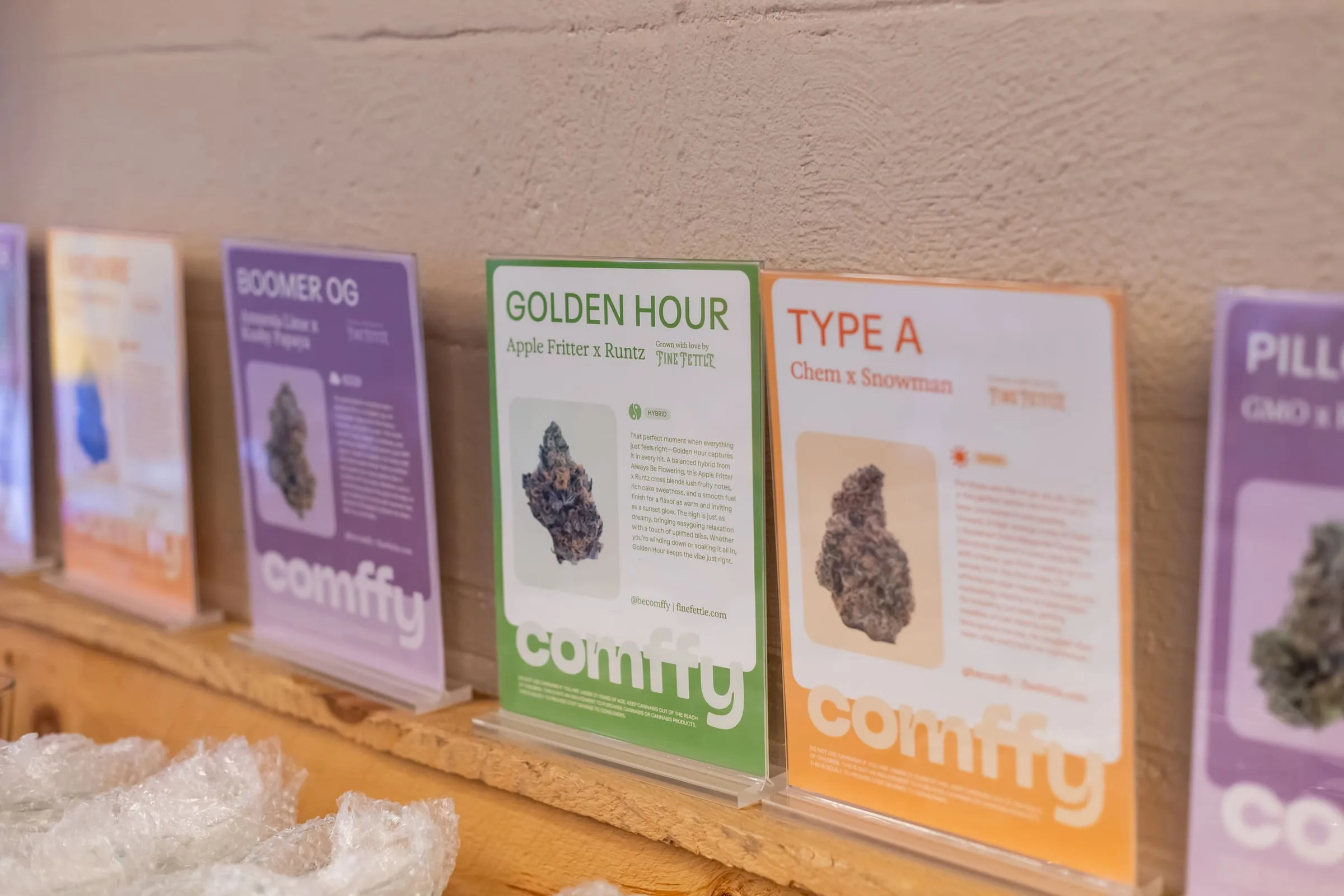
Cannabis dispensary shopping gets a lot easier when you stop treating THC like the only headline. You have probably been there: two options with a similar THC percentage, same general “category,” and yet one feels right for your day while the other lands totally differently. In our stores, that is one of the most common comments we hear, and it usually comes down to the parts of the label most people skip: cannabinoids and terpenes.
We are Fine Fettle, and our job is to help you make choices that feel more predictable, whether you are shopping adult-use cannabis in Connecticut or Massachusetts, or navigating Georgia’s medical cannabis program. This guide is the practical version of what our cannabis guides talk through all day long, with a few shortcuts you can actually use at the counter.
Cannabis dispensary labels 101: cannabinoids tell you the “what”
Cannabinoids are natural compounds made by the cannabis plant. They interact with your body’s endocannabinoid system, which plays a role in things like mood, sleep, appetite, memory, and how you experience discomfort. If you want a straight, science-first overview, the National Institute on Drug Abuse explanation of cannabis and the endocannabinoid system lays out the basics in a way that is easy to follow.
When you are looking at a menu or a jar label, think of cannabinoids as your “starting coordinates.” They help you estimate potency and the general lane a product sits in. They are not the whole story, but they are a big part of why a product feels the way it feels.
- THC: The primary intoxicating cannabinoid. It is the one most people notice first, and it can feel different depending on dose, tolerance, and product format.
- CBD: Non-intoxicating. Many shoppers look for CBD-forward or balanced THC:CBD products when they want a clearer-headed experience, or when they prefer a gentler pace.
- Minor cannabinoids: You might see CBG, CBN, or CBC on lab results, especially in products built around a specific use-case like daytime function or nighttime wind-down. Research is still developing, but there is growing scientific interest in these compounds.
Terpenes at a cannabis dispensary: the “how it feels” clues you can smell
Terpenes are aromatic compounds found in cannabis and many other plants. They are why lemon peel smells sharp, pine needles smell crisp, and lavender smells soft. In cannabis, terpenes drive a lot of what you taste and smell, and many shoppers also use terpene profiles as a practical way to predict the character of a product when paired with cannabinoids.
Here is how this shows up in real life: when you tell us, “I want relaxed but not foggy,” you are usually describing a terpene direction as much as a THC level. If you can remember two or three terpenes you tend to like, you can shop faster and with fewer surprises.
| Terpene | Typical aroma | How shoppers often describe the vibe |
|---|---|---|
| Myrcene | Earthy, musky | More settled, more “sink into the couch,” especially at higher doses |
| Limonene | Citrus, bright | Lighter, more upbeat, good for “I still want to do things” |
| Linalool | Floral, lavender-like | Calm, mellow, end-of-day energy |
| Pinene | Pine, fresh | Crisper feel, sometimes chosen for a more “clear” profile |
| Beta-caryophyllene | Peppery, spicy | Often picked by shoppers looking for a grounded, body-forward feel |
One terpene worth calling out is beta-caryophyllene, because it has been studied for how it can interact with CB2 receptors. If you like going deeper on the science, Frontiers in Pharmacology’s overview of beta-caryophyllene and anti-inflammatory mechanisms explains why it keeps showing up in cannabis research conversations.
Why “highest THC” is not the best cannabis dispensary strategy
We are not anti-THC. THC matters. It is just not a full description of the experience. In day-to-day shopping, we see the same pattern: when someone chases the biggest number, they are more likely to end up with something that feels too intense, too sleepy, or simply not what they had in mind.
Instead, you will usually do better with a quick check of the full label story:
- Potency: total THC and serving size.
- Balance: is there CBD, or a notable minor cannabinoid?
- Terpenes: what are the top two to four, and do they match what you tend to like?
- Freshness and format: a vape, flower, and tincture can feel very different even when the cannabinoids look similar.
This is also why blanket advice tends to fall flat. Even major medical publications point out that cannabis is more complex than a THC-only approach. Harvard Health Publishing’s overview of medical marijuana is a good reminder that different compounds and different dosing patterns can shape both outcomes and side effects, and that individual responses vary.
A cannabis dispensary way to think about the entourage effect
You will hear the term entourage effect in a lot of dispensary conversations. The simple idea is that cannabinoids and terpenes may work differently together than they do alone, which is one reason some people prefer full-spectrum products or strain-specific profiles.
We keep this grounded when we talk about it with you. It is not a magic rule, and nobody can promise a guaranteed result. But as a shopping framework, it is useful: if you find a cannabinoid ratio and terpene profile that feels like a fit, you can often look for similar profiles again, even when strain names change.
How to shop a cannabis dispensary menu like a regular (even if you are new)
If you want more consistency, use the same five-part decision check our staff runs through with customers every day. You can do it in under a minute.
- Format: flower, vape, tincture, capsule, topical, or other options allowed in your state.
- Timing: how quickly you want to feel it, and how long you want it to last.
- Potency: total THC and dose per serving.
- Cannabinoid ratio: THC-only, THC:CBD balance, or a product that highlights minor cannabinoids.
- Terpene profile: the top two to four terpenes you tend to enjoy.
Then, bring us a question that gives us something to work with. These are the kinds of prompts that lead to better recommendations and fewer “well, that was not what I expected” moments.
- For evenings: “I want to loosen up after work, but I do not want to feel glued to the couch. What terpene profiles should I look for?”
- For balance: “Do you have something that is not THC-only, like a more balanced THC:CBD option?”
- For repeat buys: “I liked the top terpenes in this last product. What else on the menu looks similar, even if the strain name is different?”
- For responsible dosing: “What is a good low-dose starting point for this format, and how long should I wait before I consider more?”
If you want more ideas for better in-store conversations, keep our internal guide handy: 8 questions to ask your budtender to maximize your experience.
State-by-state notes: Connecticut, Massachusetts, and Georgia
Fine Fettle serves Connecticut, Massachusetts, and Georgia, and the rules are not one-size-fits-all.
- Connecticut and Massachusetts: Adult-use cannabis is available for customers 21+, and both states also serve medical cannabis patients. If you are comparing products, you will still use the same label-reading approach: format, dose, cannabinoids, and terpenes.
- Georgia: Georgia is medical-only, and the terminology matters. Georgia SB 220, also known as the “Putting Georgia’s Patients First Act,” updates the state’s medical program language by replacing the old “low THC oil” framework with broader medical cannabis terminology, clarifies patient and caregiver access, and expands the product framework while keeping the program regulated and not adult-use. You can read the text directly in the Georgia Senate Bill 220 document.
In Georgia, you will also see category language that is different than what shoppers are used to up north. For example, you may hear “soft drops” instead of “edibles.” And since 7/1/26, flower and vape products are available to customers in Georgia who are 21+. If you are a registered patient or caregiver, we strongly recommend you also check in with a medical professional for guidance that fits your personal health situation, especially if you are managing other medications.
If you want a quick reset on product types, labels, and what to expect in-store, start with our Cannabis 101 education page. If you have a question tied to your location, your patient status, or what is currently on the menu, the fastest path is to reach our team through Fine Fettle customer support.
FAQ: terpenes, cannabinoids, and cannabis dispensary shopping
Do terpenes really change the effects of cannabis?
They always change aroma and flavor. Many shoppers also find that terpene profiles track with how a product feels, especially when THC is similar across options. The most useful move is to notice the top terpenes in products you liked, then look for that pattern again.
Should you shop by terpene profile or THC percentage?
Use both. THC helps you gauge potency. Terpenes and cannabinoid ratios help you compare two products that look similar on THC alone, and they often give you better “fit” clues than strain names.
What is the easiest way to read a dispensary label?
Start with format and dose per serving, then total THC and CBD, then scan the top two to four terpenes. If you are stuck between two options, matching terpene profiles is usually more helpful than matching strain names.
Are minor cannabinoids like CBG or CBN worth paying attention to?
They can be, especially if you are trying to fine-tune your routine. Think of them as additional context, not a guarantee. Your dose, tolerance, and terpene profile still matter.
How do you avoid overdoing it with a new product?
Start low and go slow, and give it time before you take more. Timing varies a lot by format, so ask us what onset and duration typically look like for what you are buying.
Conclusion
Once you know how to read cannabinoids and terpenes, cannabis dispensary shopping feels less like guesswork and more like building a personal shortlist. Bring us your goal, your preferred pace, and a couple of terpene notes from something you liked before. We will help you narrow it down within your state’s rules, and we will keep the advice focused on safe, responsible use.