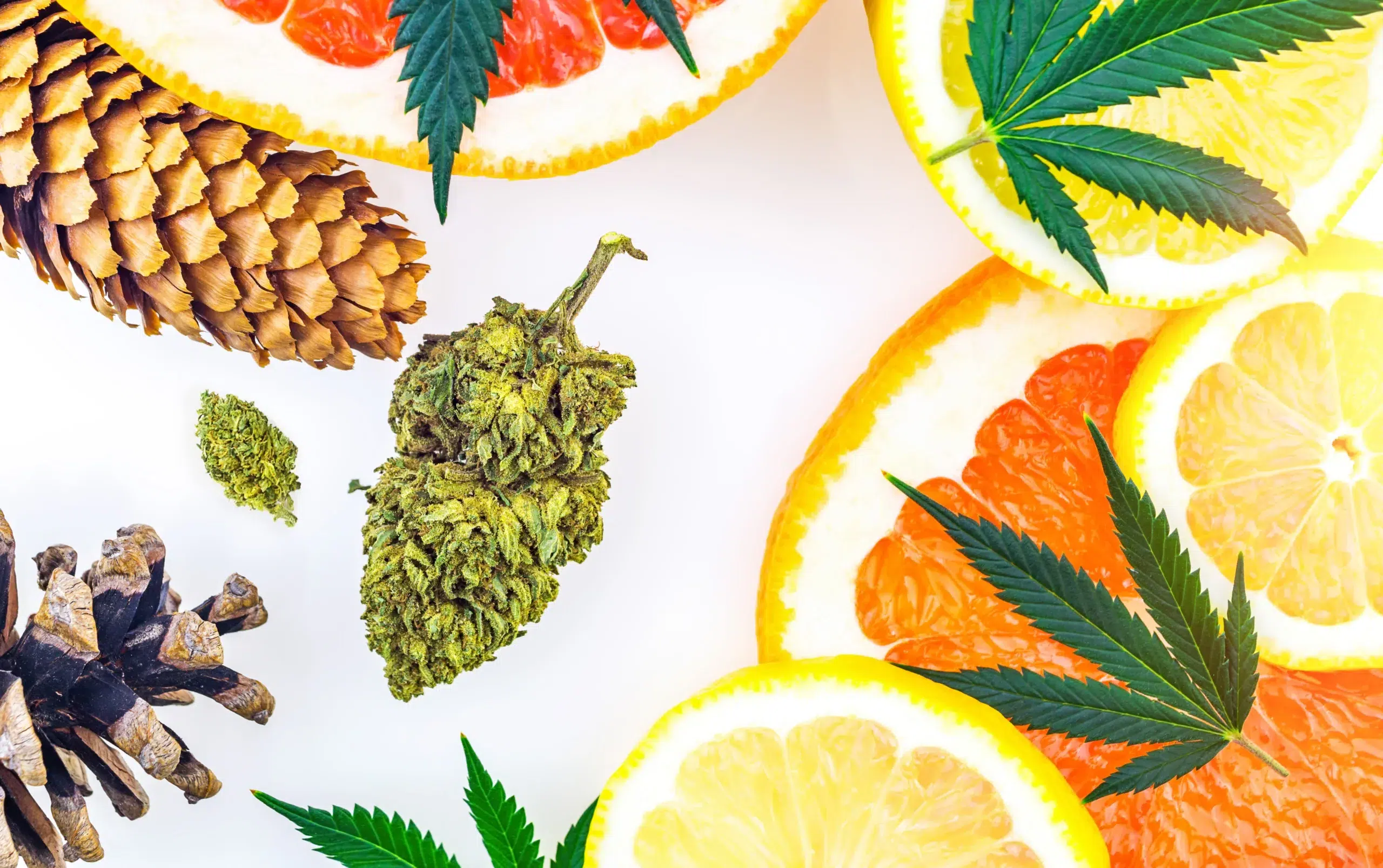
Cannabis terpene profiles are the quickest way to explain why one jar smells like orange peel, and another smells like a pine forest. They’re also a big reason two products with similar THC can feel totally different for you.
At Fine Fettle, we see this switch happen all the time: you start by shopping THC percentages, then one day you read the full label, notice the terpenes, and everything clicks. This guide is the friendly version of that “aha.” You’ll learn what terpenes are, how to read cannabis terpene profiles without turning it into homework, and how to use that info to shop with more confidence.
What are terpenes?
Terpenes are aromatic compounds that show up all over the plant world. They’re part of why lavender smells like lavender and why citrus zest is so punchy. Cannabis makes them too, mostly in the sticky trichomes that also hold cannabinoids like THC and CBD. That overlap is why aroma, flavor, and the overall character of a product often travel together.
If you want a refresher on where cannabis terpenes are found in the plant and why they matter to scent and taste, Healthline has a solid overview of cannabis terpenes and where they’re found in the plant.
Why cannabis terpene profiles matter more than you think
Terpenes aren’t intoxicating on their own, but they can still influence how your session feels, especially when they show up alongside cannabinoids and minor compounds. You’ll hear people call this the entourage effect, the scientific hypothesis that cannabinoids, terpenes, and minor compounds work synergistically to modulate the overall pharmacological outcome.
In our stores, the pattern is pretty consistent. When you only chase the highest THC number, the results can feel unpredictable. When you start matching products by terpene profile, a lot of customers report that things feel easier to repeat, even when the strain names change. It’s not a guarantee, because your tolerance, your setting, and your dose still matter. It’s simply a more useful starting point than THC alone.
Common terpenes you’ll see on cannabis terpene profiles
You don’t need to memorize chemistry to use a terpene panel. Most labels and COAs highlight the top 3 to 5 terpenes. If you learn a few usual suspects, you can get surprisingly far.
| Terpene | Often smells like | Why you might care |
|---|---|---|
| Myrcene | Earthy, musky, herbal. | A common pick when you want something more grounded and mellow. |
| Limonene | Citrus peel, bright and zesty. | Often chosen for a lighter, more upbeat feel, especially for daytime routines. |
| Beta-caryophyllene | Peppery, spicy, clove-like. | Unique for binding to peripheral CB2 cannabinoid receptors. Often found in soothing or recovery-focused profiles. |
| Linalool | Floral, lavender-like. | Commonly associated with calmer, wind-down leaning profiles. |
| Pinene | Pine needles, fresh forest air. | Often discussed when shoppers want something clearer and less foggy. |
| Terpinolene | Herbal, citrus, floral, slightly sweet. | Shows up in some bright, “get moving” type profiles. |
| Humulene | Earthy, woody, hops-like. | Frequently discussed when shoppers are paying attention to appetite cues. |
How to read cannabis terpene profiles on labels and COAs
A cannabis terpene profile is simply a list of which terpenes are present and how much of each one is in the product. You’ll usually see percentages for flower and concentrates, and sometimes milligrams per gram on lab reports. Either way, the move is the same: start with the top terpene, then look at the next two. Those three usually tell you what the aroma and the overall vibe will be.
When you’re shopping with us, we might ask you two questions:
What do you like it to smell and taste like?
Citrus, gas, pine, floral, earthy, sweet, or something else.
What kind of experience are you aiming for?
More settled, more clear-headed, more upbeat, or more balanced.
From there, we can narrow the menu quickly. If you tell us you love citrusy flower and want a daytime-friendly feel, we might start by looking for profiles high in limonene or terpinolene. If you prefer earthy aromas and a more relaxed feeling, myrcene is a common starting point.
Terpenes by format: flower, vapes, concentrates, and soft drops
Terpenes show up differently depending on how a product is made and how you use it.
Flower
tends to make terpenes obvious because your nose is doing a lot of the work. Old, dry flower often smells flatter for a reason.
Vapes and concentrates
can be extremely terpene-forward if the extraction method preserves the original profile. Highly refined distillate may have fewer native terpenes unless they’re reintroduced after processing.
For ingestibles like soft drops and edibles,
digestive processing and first-pass liver metabolism mean onset time and dose are the primary drivers of your experience. While terpenes added to ingestibles contribute to flavor, their physiological impact is less dominant than in inhaled formats like flower or vapes.
If you’re shopping in Georgia, keep the state-specific language in mind. Georgia is medical-only, and product categories can look different than what you may have seen elsewhere. You’ll also see “soft drops” used instead of “edibles.”
How Fine Fettle customers use terpene notes to shop smarter
This is one of our favorite tricks because it’s simple. Instead of trying to remember five strain names, keep a note of your new favorite terpenes and how the product made you feel.
Here are a few patterns our teams see:
People who track top terpenes find their routine faster.
Inventory rotates, but terpenes are easier to match than strain names.
Customers who are sensitive to intense THC effects do better with a familiar terpene lane.
They pick something that’s felt manageable before, then adjust dose slowly.
Consistency comes from matching both format and terpene profile.
Swapping a vape for flower, or flower for soft drops, can change timing and intensity even if the terpenes look similar.
For a deeper label walkthrough, our blog post on terpenes and cannabinoids for dispensary shoppers is a good next step. And if you want a broader foundation that connects products, timing, and responsible shopping basics, keep our Cannabis 101 education hub bookmarked.
Georgia note: medical cannabis language changed under SB 220
Responsible use
FAQs
Do terpenes get you high?
No. Terpenes are aromatic compounds and aren’t intoxicating by themselves. THC is the primary intoxicating cannabinoid. Terpenes may influence the overall experience when they show up alongside cannabinoids.
What are terpenes supposed to do in your cannabis experience?
They shape aroma and flavor, and they may help steer the character of an experience by working alongside cannabinoids and other compounds. Because responses vary person to person, treat terpene info as a helpful guide – not a guarantee.
How do I use cannabis terpene profiles to shop better?
Look at the top 3 terpenes on the label or COA, and then compare them to products you’ve enjoyed before. If you want more consistency, match terpene patterns instead of relying only on strain names or THC percentage.
Can two products with the same THC feel different because of terpenes?
Yes. Differences in terpenes, minor cannabinoids, and product format can all shift how a product feels, even when THC looks similar.
What if I can’t find terpene info on a product?
Ask our team whether terpene testing is available for that batch, or choose brands that consistently publish terpene results. With flower, aroma is also a practical clue because your nose is picking up terpene content in real time.
Start shopping based on smell, flavor, and experience
Once you get comfortable with cannabis terpene profiles, shopping gets simpler. Want help comparing a few terpene profiles or reading a label before you buy? Reach out through the Fine Fettle contact page, and we’ll point you in the right direction.